Field notes
Practice Guide
An editorial guide to working with apparatus across the four disciplines we build for — inversion, backbend, restorative and foundations. Build range patiently; let the equipment hold the load so your attention can stay on the breath.
The four disciplines
Every piece we make is designed around one of four kinds of work. Each has its own logic — what it asks of the body, what the apparatus is doing, and how to progress without rushing.
Inversion
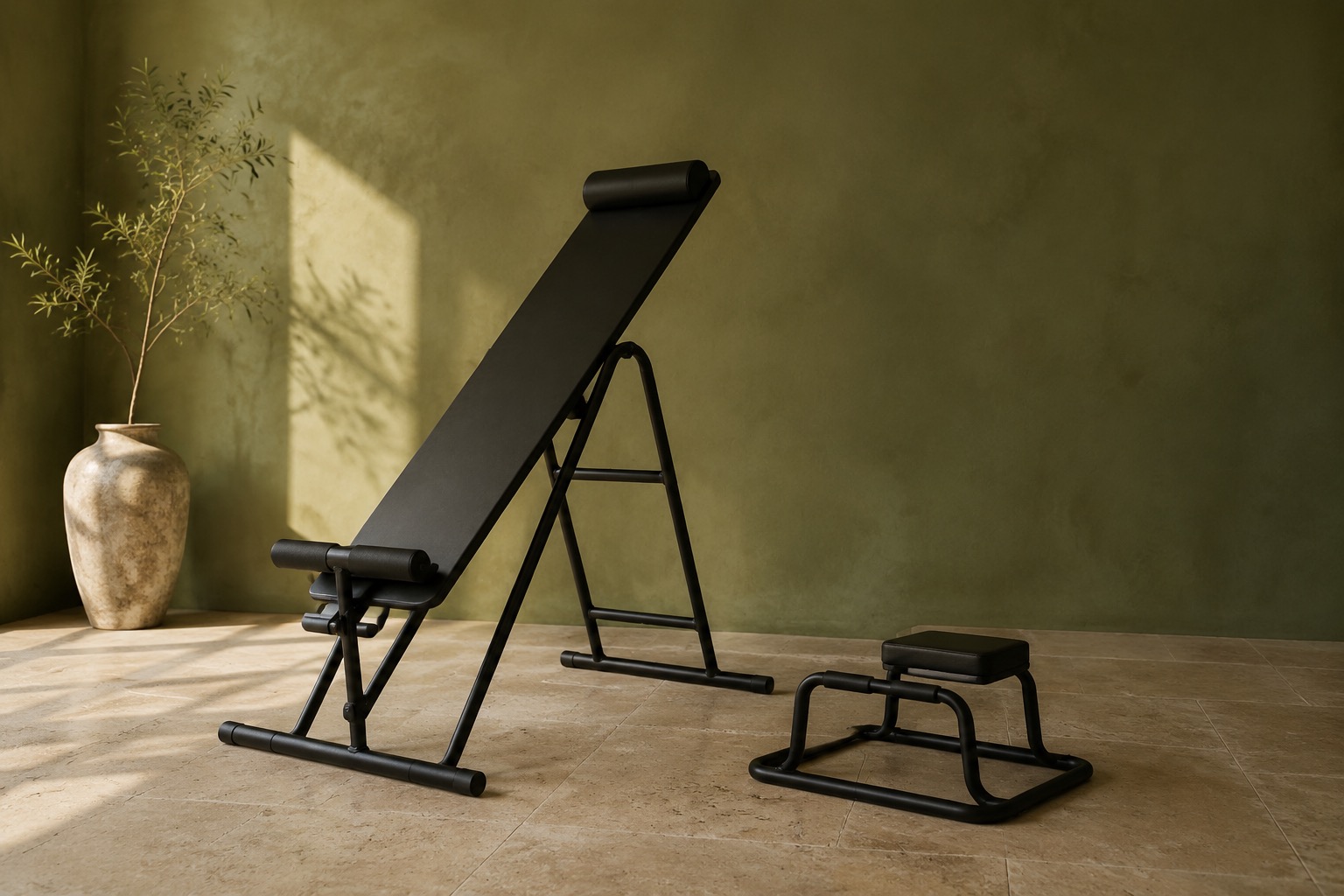
Inversion work — headstand prep, shoulder-supported shapes, hanging and suspension — uses the apparatus to take partial or full body weight so the cervical spine and shoulders are not loaded before they are ready. The point of a wall unit or hanging frame is not to go further, faster; it is to let you spend longer in a stable, unweighted shape and learn the alignment before you ever balance unassisted.
Begin with short holds — thirty to sixty seconds — and a clear exit you can perform calmly. Keep the load symmetrical, the gaze soft, and stop the moment the breath becomes ragged or you feel pressure in the head, eyes or ears.
Backbend
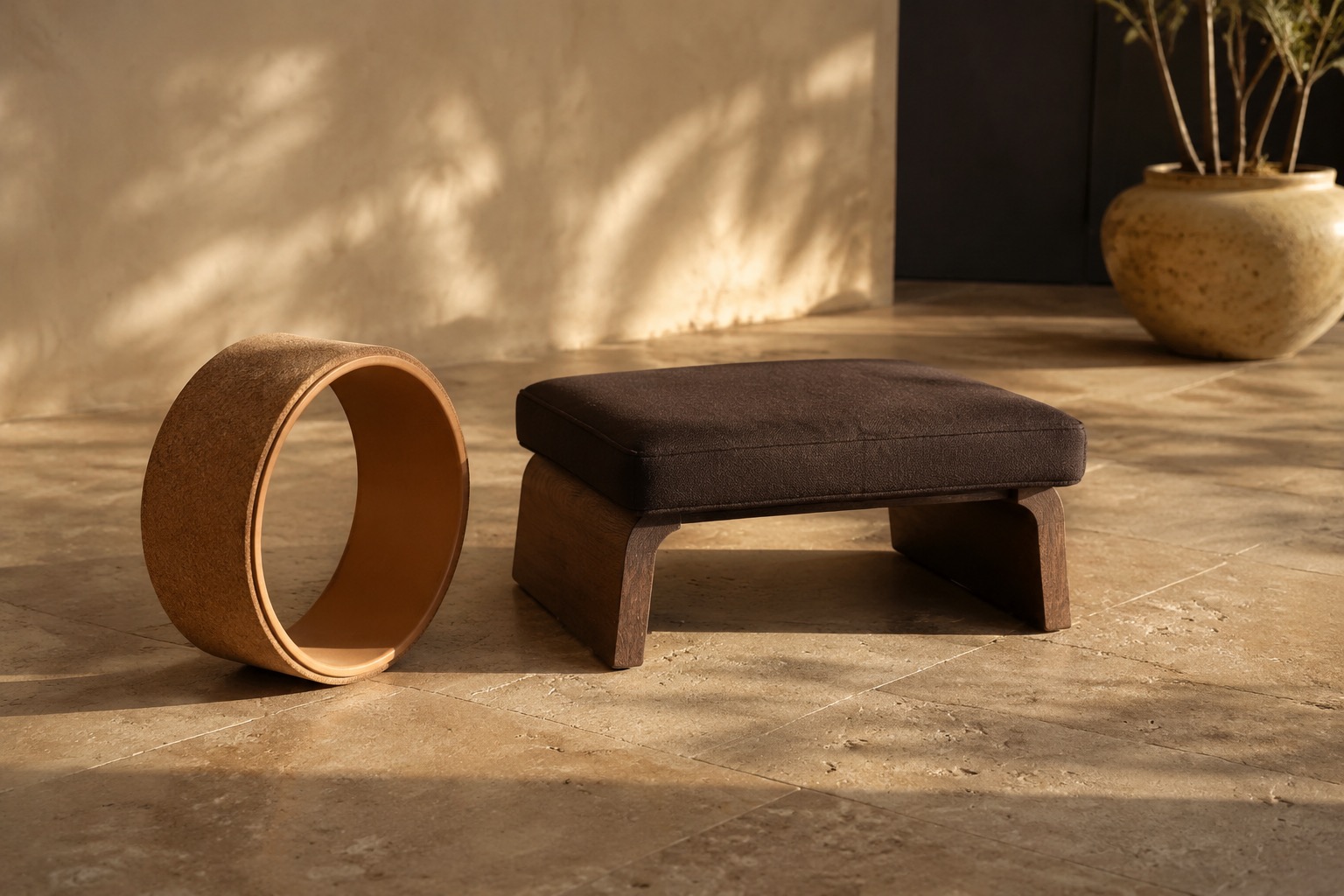
Supported backbends over a contoured bench or wheel open the front of the body while the prop carries the curve, so the lower back is not asked to do all the work. The apparatus distributes the arc across more of the spine. Move into the shape on an exhale, rest the ribs and shoulders into the support, and let gravity do the opening rather than forcing depth with the arms.
Restorative
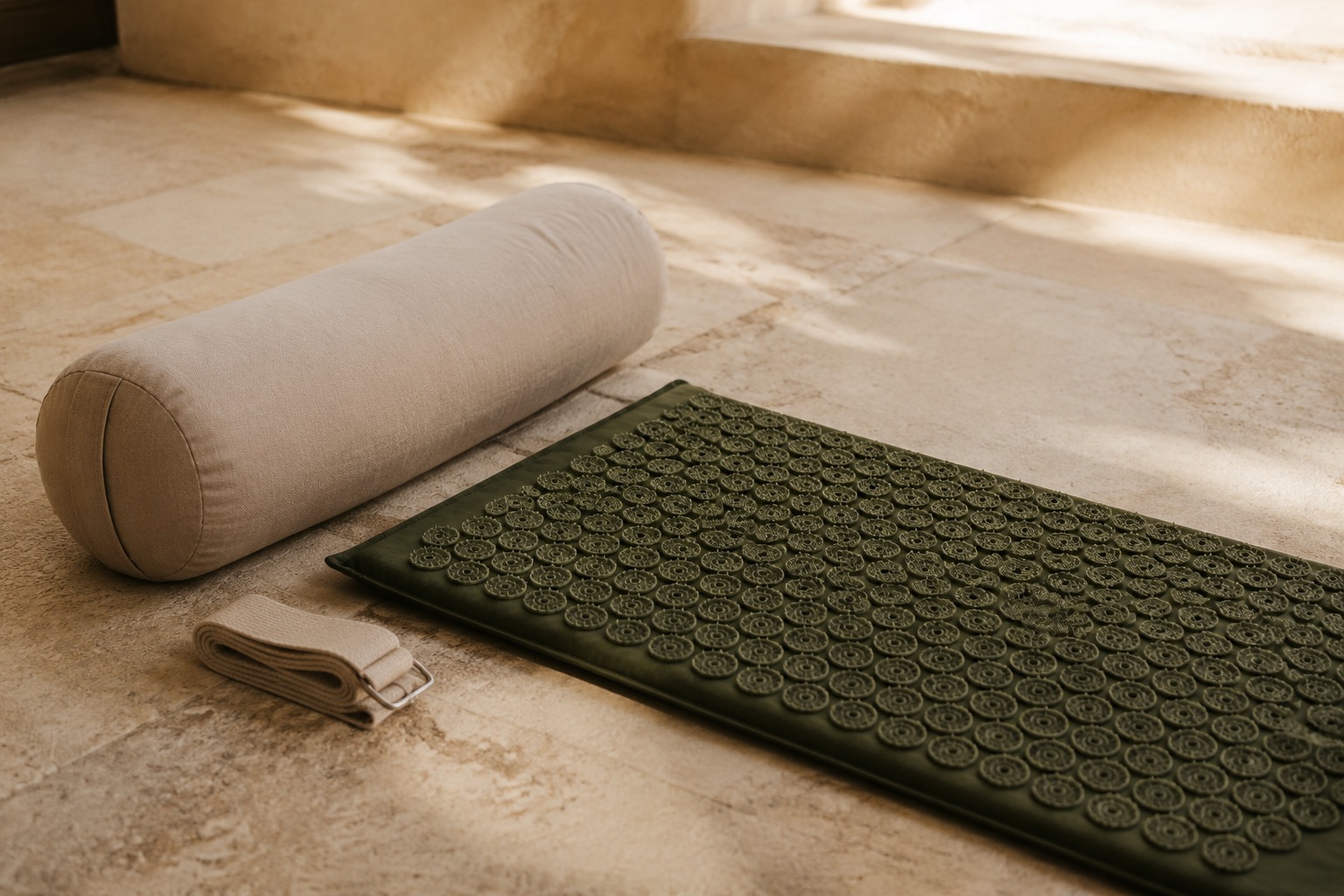
Restorative practice is the opposite of effort. Bolsters, blankets and straps are arranged so the body is fully propped and nothing needs to be held. The aim is to stay in a comfortable, well-supported shape long enough — often five to twenty minutes — for the nervous system to settle. If any part of you is working to stay in position, add a prop until it isn't.
Foundations
Foundations covers the everyday tools — mats, blocks, straps and cushions — that make standing and seated work cleaner. Blocks bring the floor closer; straps extend your reach without rounding the spine; a planted mat keeps the base quiet so the pose can be built from the ground up.
How to progress safely
Progress is a function of consistency, not intensity. A few sound principles travel across all four disciplines:
- Work within a trained range. Only go as far as a shape you can enter, hold and exit with steady breathing and full control.
- Earn each stage. Add height, depth or hold time in small increments over weeks — not within a single session.
- Set up before you load. Place and check the apparatus, confirm it is stable and on a level surface, then enter the shape.
- Keep an exit in mind. Never enter a loaded position you cannot calmly come out of on your own.
- Let the breath be the gauge. Smooth, even breathing means you are within range. Strain in the breath is the signal to back off.
Warming up
A short, deliberate warm-up makes apparatus work both safer and more rewarding. Spend five to ten minutes raising the temperature of the tissue and waking up the joints you are about to ask the most of:
- A few rounds of slow, full breathing to settle attention and lengthen the spine.
- Gentle mobility for the wrists, shoulders and neck before any inversion; for the hips, thoracic spine and shoulders before backbends.
- A handful of unloaded reps of the shape you intend to support — learn the path before you add the apparatus.
- A grounding pose to confirm the base is quiet and your weight is evenly distributed.
When to use which prop
Choosing the right tool is mostly about matching support to intention:
- Blocks — when the floor feels far away, or to create a stable platform under the hands or seat.
- Straps — when reach is the limiting factor; they extend the arms without collapsing the chest or rounding the back.
- Bolsters & blankets — for restorative shapes and any time the body needs to be fully propped to release.
- Benches, wheels & wall units — when you want the apparatus to carry load through inversion or backbend work, so the spine and joints are supported throughout.
Practice safely
Always work within a range you have trained, and progress gradually under the guidance of a qualified teacher. Apparatus supports your practice — it does not remove its inherent risks. Consult a physician before beginning inversion, backbend or headstand practice if you have a history of injury, are pregnant, or live with any blood-pressure, heart, eye, neck or spinal condition. Stop immediately and seek advice if you feel pain, dizziness, pressure in the head or eyes, numbness or any symptom that is not simply effort. Our products are equipment for movement practice and are not intended to diagnose, treat or address any medical condition.